‘I love the work we do, and I hear the value every day’ The role of Personalised Care in Neighbourhood Health in North West London

The Coalition for Personalised Care publishes a stocktake report into the use of Personalised Care alternative roles (since this work was commissioned, North West London ICB has merged with North Central London ICB to form West and North London ICB).
The Personalised Care roles are a key part of the health and care workforce within the area. As an integral part of multi-disciplinary teams in neighbourhoods, these roles are enablers for both the shift from hospital to community and from sickness to prevention. If invested in sufficiently, these roles will help the delivery of the goals within the Neighbourhood Health Framework. However, it follows that not having sufficient Personalised Care role availability may have a negative impact on demand for GP appointments, and on acute and ambulance emergency care. Delivering the Neighbourhood Health target of 90% of clinically urgent appointments being seen on the same day requires a blended staffing team, and for non-urgent demand to be seen by the most appropriate person, not necessarily the GP. People with unmet clinically urgent needs will be more likely to attend ED. Vaccination and screening opportunities will be missed, and the health inequality gap will grow wider across populations.
For Neighbourhood Health to succeed, “a fundamental reimagining of the roles, skills and ways of working across health and social care over the next decade.” [1] is required. This report aims to support that reimagining within the context of what Personalised Care roles can offer. The full report explores perspectives from a wide range of stakeholders and reveals the downward employment trends of these roles, what’s effective support and relationships within neighbourhood teams and issues related to data collection. To read it click here
West and North London ICB has a strategic opportunity to use the Personalised Care roles to maximise the potential of the Neighbourhood Health framework.
Recommendations:
- Ensure Personalised Care roles are embedded within local delivery frameworks as part of the Neighbourhood Health Programme
- Use the Comprehensive Model of Personalised Care as the underpinning model of care for Neighbourhoods
- Understand the cost benefit of Personalised Care roles
- Include Personalised Care in strategic commissioning intentions for pathways
- Develop clear competencies frameworks for the Personalised Care roles
- Develop a comprehensive map of what Personalised Care roles are where
- Invest in ICB-wide training, supervision and peer support for all Personalised Care roles
- Maximise the opportunities for digital enablement
- Develop a standard set of local metrics to demonstrate impact
Related Documents
Personalised Care roles and Neighbourhood health in NWL August 2026 – Power Point
Disabled man ‘rotting’ on a hospital ward – despite being told he is fit to go home
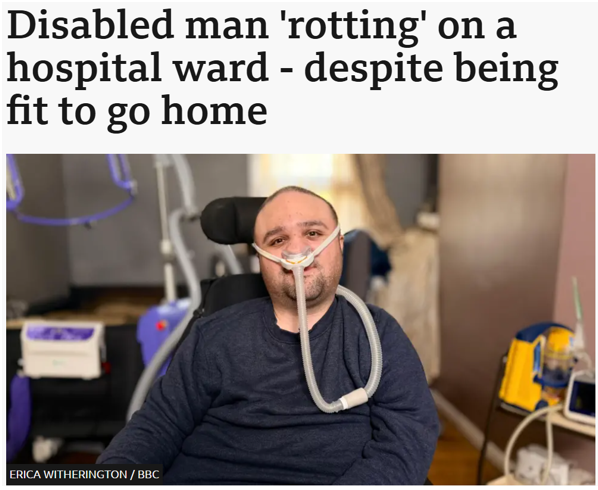
Ravi Mehta, 36, says his “life will be over” if he is moved to a care home
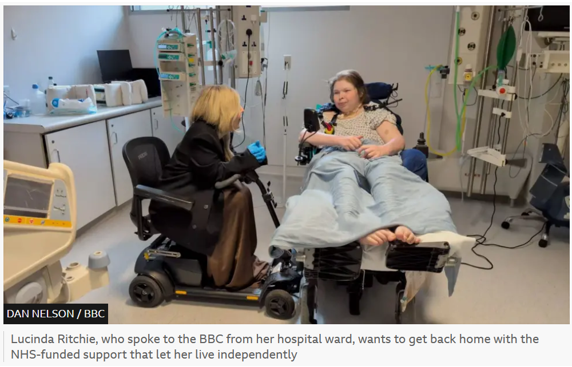
Disabled man ‘rotting’ on a hospital ward – despite being told he is fit to go home – BBC News (Link to the BBC Article)
Nobody is winning – we can and must avoid lengthy delayed discharges
The BBC has recently highlighted two cases of younger adults. Both are eligible for continuing health care and have lived at home supported with a personal health budget (PHB). They are now trapped in hospital beds for months, despite being fit for discharge. They cannot get their PHBs restarted. The BBC asked the Coalition for Personalised Care for our insights into why this is happening.
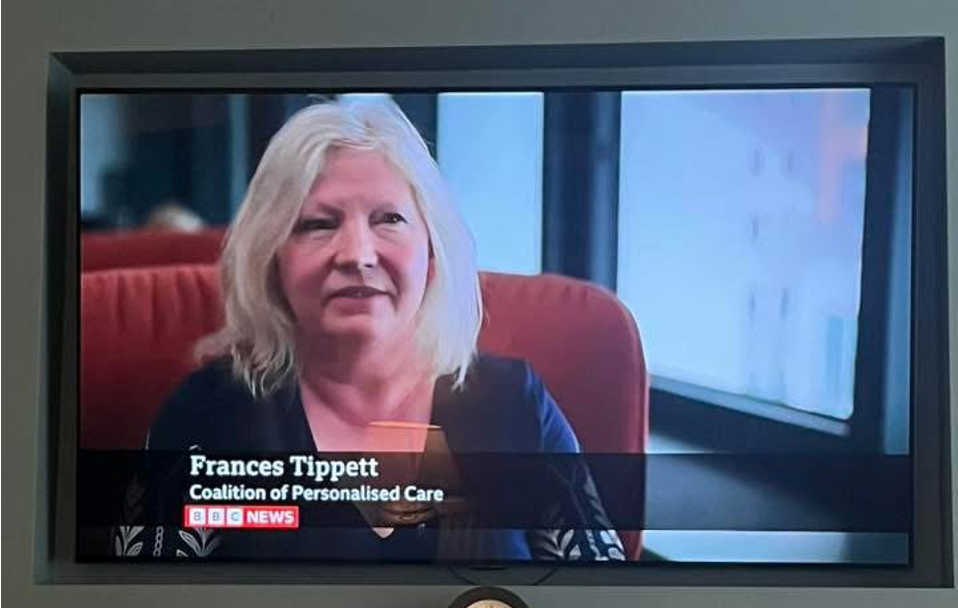
The extract from my interview used in the BBC 6pm News was “I think nobody wins, certainly these people who are not able to live the lives they want to lead and feel they are being treated cruelly are not winning …..and actually as taxpayers we want the most efficient use of resources….”
I’ve thanked the BBC for showing this issue on the national TV news.
My full answer is this:
“I think nobody wins, certainly these people who are not able to live the lives they want to lead and feel they are being treated cruelly are not winning.
Neither are the staff working in the NHS.
Staff working in hospitals are under constant pressure to find beds for more people needing care. They know that being in a hospital bed for months on end, when you are medically fit for discharge, is really bad for you – no clinician wants to be witnessing harm.
Since an NHS restructure in 2022, integrated care boards have been under intense pressure to balance budgets while losing staff with the skills and knowledge to design complex, “person-centred” packages. All too often, as staffing in ICBs decreases, relatively junior staff are asked to take on the responsibility for Personal Health Budgets on top of their existing roles. If they don’t have the experience of managing PHBs in the community, they can see PHB packages as too risky.
NHS budgets are siloed. You can’t see the total cost of people’s care across the system. Continuing health care is a discrete budget, so a PHB care package is one of the few parts of NHS spending where the cost of an individual is highly visible. When budgets are under strain, “high-spend” individuals can stand out.
Hospital care is even more expensive than PHB packages. In cases like this we the taxpayers are left funding costly, unnecessary hospital care. And actually as tax payers we want the most efficient use of resources. By definition the 50,000 or so people who are eligible for continuing health care have the highest levels of support needs. They are always going to be expensive and complex packages.
Personal health Budgets have been proven to save money (unless there is unmet need) as well as delivering better experience of care and at least as good health outcomes. The evaluation of the national PHB pilot showed an average of 11% savings on continuing health care packages, compared to traditional models of care. That’s why national strategic finance supported PHBs for people eligible for continuing health care becoming a legal right to have.
Instead of trying to squeeze continuing health care budgets down unrealistically, Integrated Care Boards could be looking at expanding PHBs (as it says in the 10 Year Health Plan) to wider groups of people who could benefit and make savings that way. This would deliver better care for people who need it and better value for taxpayers.
Frances Tippett – Chair of the Coalition for Personalised Care
If you have a story to share of someone being stuck in hospital not able to get their PHB restarted please get in touch by emailing info@coalitionforpersonalisedcare.org
If you are working in the NHS and want help with personal health budgets reach out to us. We’re a national charity and we’re here to help.
If you haven’t already done so, please consider joining the Coalition for Personalised Care
